
Why Does Forklift Free Lift Matter for Warehouse Operations
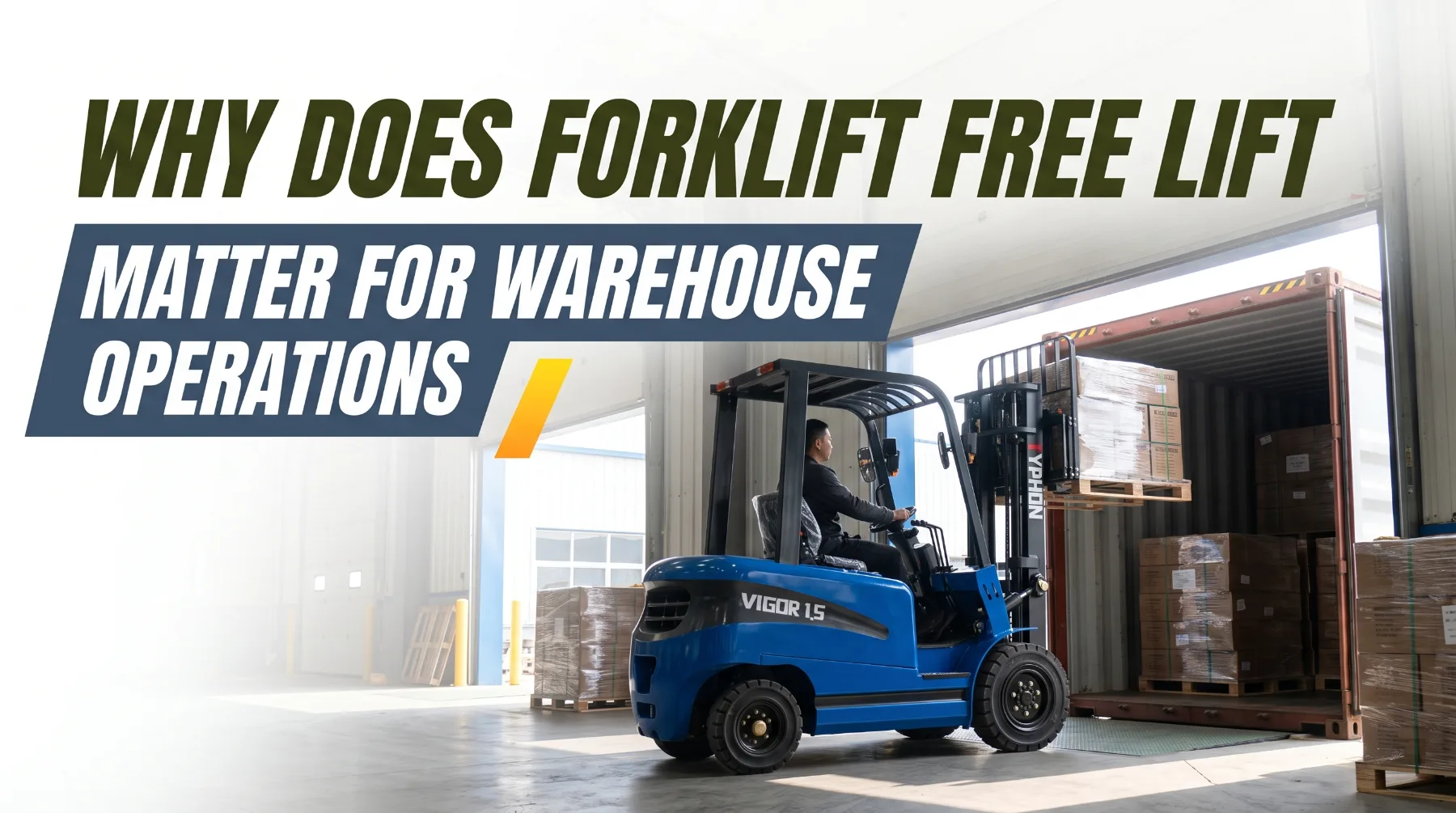
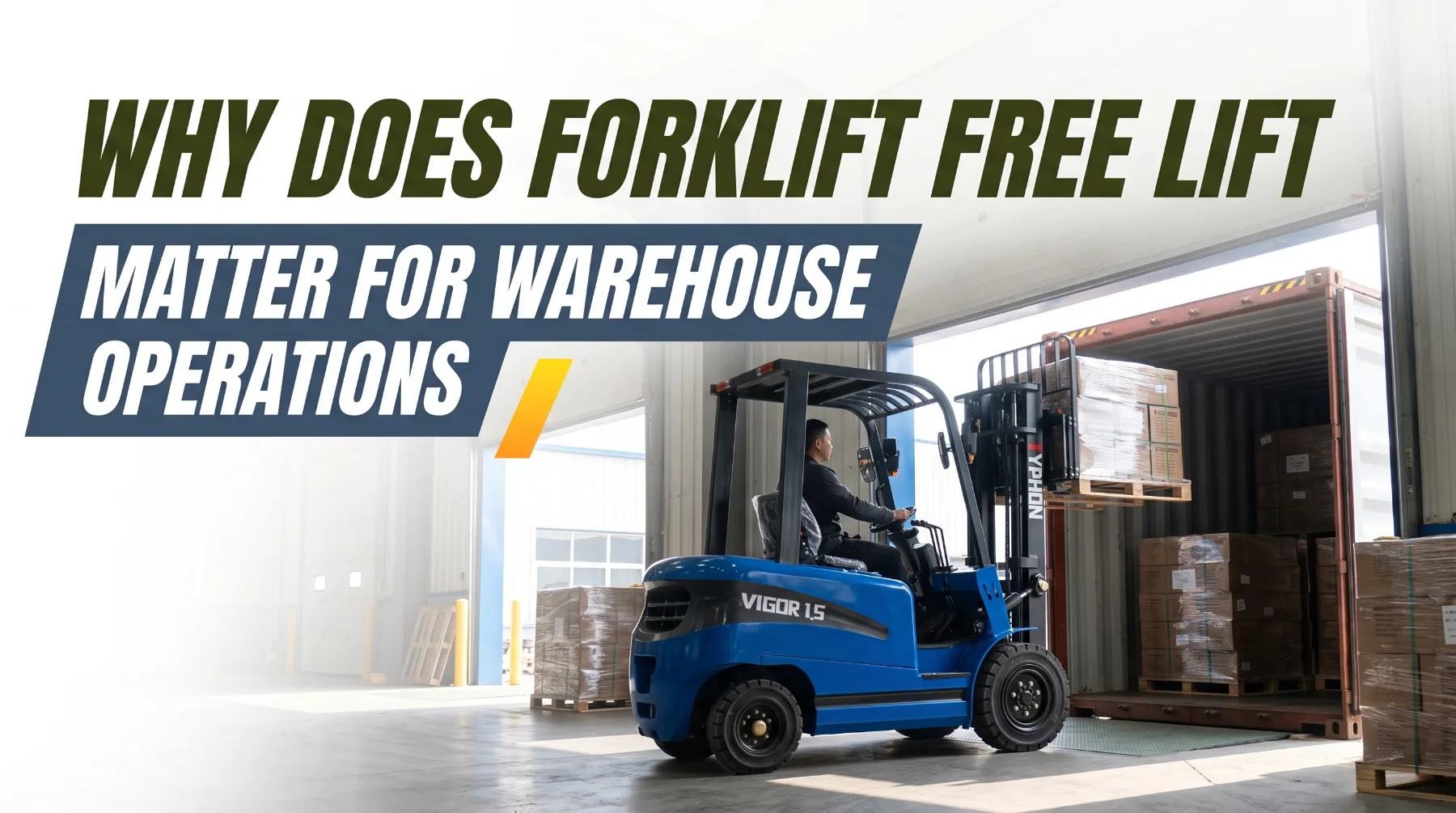 A worker backs a loaded forklift into the mouth of a shipping container, glances up at a steel roof that sits barely above the mast, and lifts a pallet from the floor onto a stack toward the rear. The load climbs, settles into place, and the mast never grows an inch taller. That quiet, easy-to-miss moment is free lift doing its job, and without it the machine would have jammed against the ceiling before the pallet ever left the ground. In warehouses, containers, and any workspace where the roof presses down close, this capability decides whether a forklift can actually reach the load or simply runs out of room. Plenty of operators go years without giving it a thought, right up until the day it becomes the one thing that gets a shift finished. Free lift tends to hide in the fine print while buyers fixate on lift height, capacity, and engine choice. Yet on the low-clearance jobs that fill so many working days, it often decides whether a forklift can do the work at all, so it deserves a much closer look.
What Free Lift Is and How It Works
Free lift is the distance a forklift can raise its forks before the mast itself starts to extend upward. On a conventional mast, the forks and the mast rise together, which means the top of the mast climbs the instant you pick up a load. Free lift interrupts that pairing for the first stretch of the lift. Carried by the inner slide and the lift chains, the forks travel up the mast rails on their own while the mast holds at its lowered, collapsed height. Only once the forks reach the top of that free-travel range does the mast begin to telescope for extra height. How much free lift a machine delivers depends entirely on how its mast is engineered, and that single design choice is what allows a forklift to raise a load in a space too short for the mast to grow. Key takeaway: Free lift is the height the forks rise before the mast extends, letting a forklift raise a load even where there is no room overhead for the mast to climb.
Why Free Lift Matters in Low-Clearance Environments
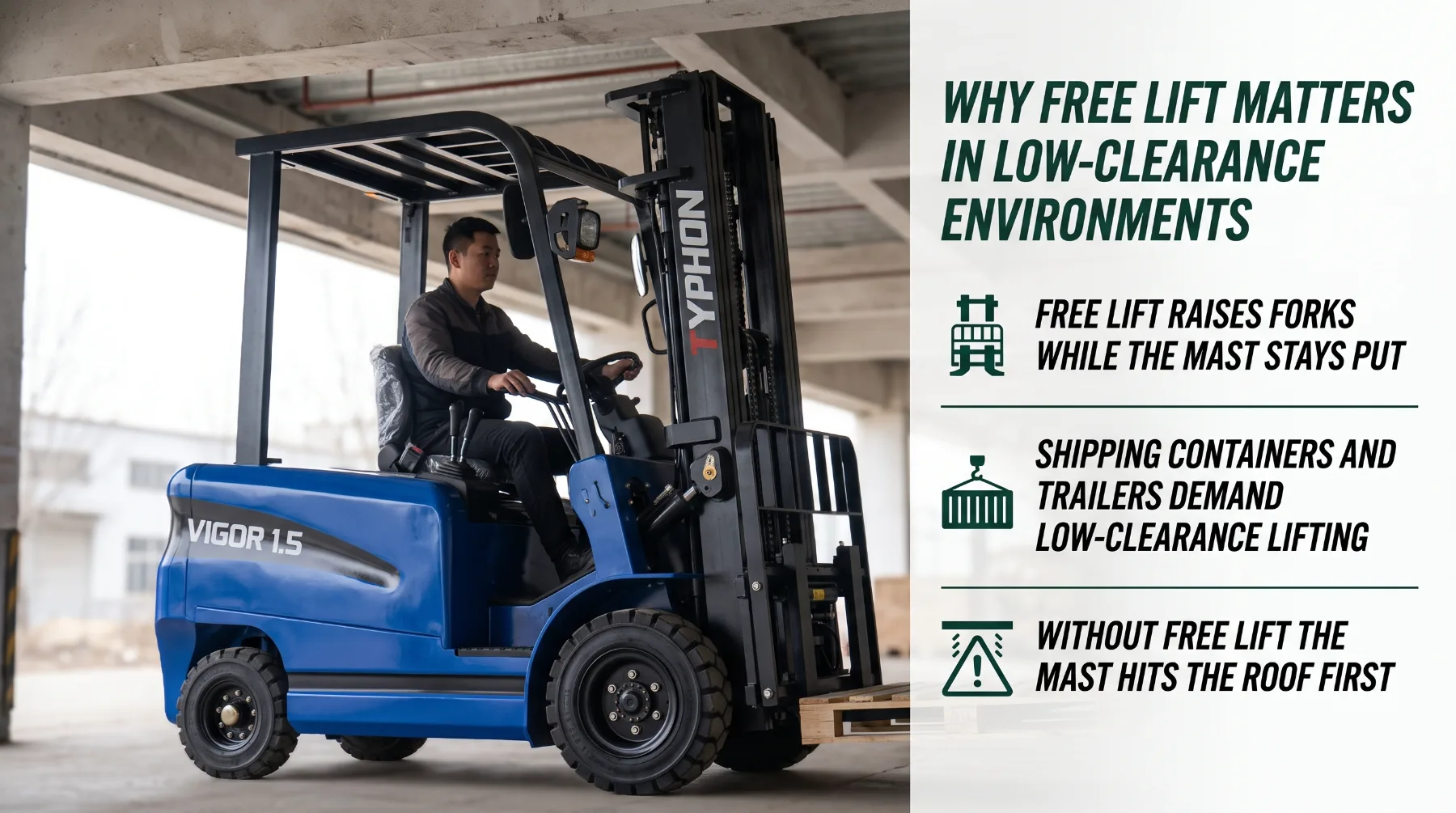 Ceiling height is a limit you cannot argue with, and in a surprising number of workspaces it sits well below the reach a forklift would otherwise offer. Shipping containers, rail boxcars, trailer beds, and older buildings with low rafters all trap a machine beneath a lid it has no way to exceed. Send a forklift without free lift into one of those spaces and the problem shows up immediately: the moment it tries to lift, the mast rises and drives its top straight into the roof, ending the task before it starts. Free lift clears that roadblock by letting the forks rise while the mast stays put, so a load can be stacked or pulled even when there is only a sliver of space above the machine. For any operation that loads containers or works under low ceilings, this stops being a nice extra and becomes the deciding factor in whether the machine can function there at all. Key takeaway: In containers, trailers, and low-ceilinged buildings, free lift is what lets a forklift raise a load without the mast striking the roof, making it essential rather than optional.
How Free Lift Affects Racking and Mezzanine Operations
The payoff from free lift reaches well past the loading dock and shapes how a warehouse arranges its storage. Where racking climbs high but the ceiling above the aisle stays low, generous free lift lets an operator load pallets onto the bottom racking levels without the mast rising into beams, sprinkler lines, or ductwork overhead. Mezzanine work runs on the same principle. Lifting stock onto a raised platform, or sliding it onto shelving tucked underneath one, means raising the forks in a space where the vertical room is already accounted for. A forklift carrying ample free lift moves through these tasks without fuss, tucking loads under structures that would otherwise demand clumsy workarounds or leave a shelf unusable. The whole warehouse gains from it, because the building can put more of its height to work when the equipment can actually reach the storage it builds instead of being stopped by the roof that covers it. Key takeaway: Ample free lift lets forklifts load lower racking and serve mezzanines beneath low overhead structures, helping a warehouse use its vertical space instead of wasting it.
How Free Lift Compares to Full Lift
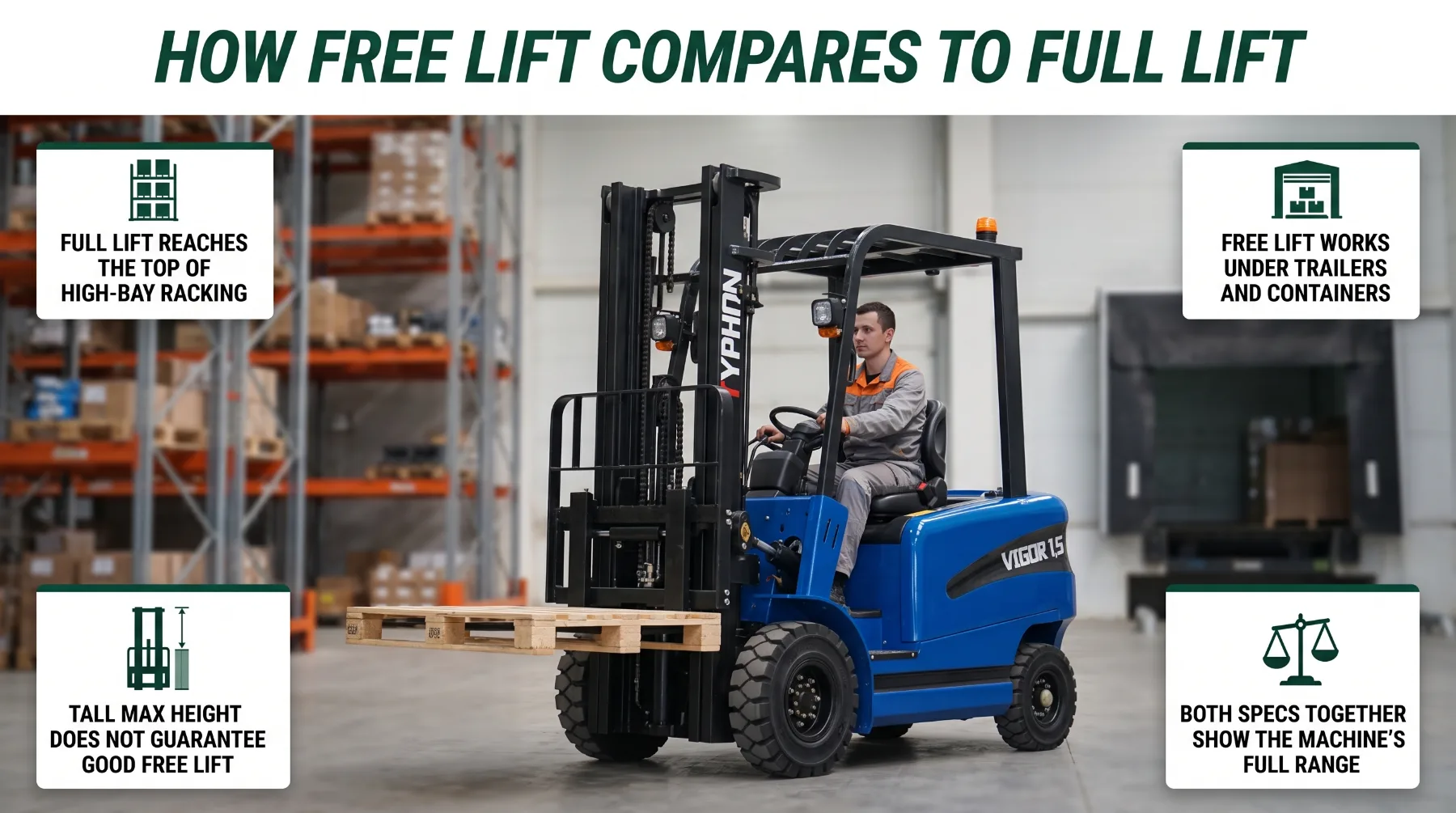 Full lift, also called standard or main lift, is the total height a forklift can raise its forks with the mast fully extended, and it answers a different question than free lift does. Full lift tells you how high the machine can reach; free lift tells you how much it can raise before the mast needs to grow at all. A forklift can boast an impressive maximum height and still offer very little free lift, meaning it stretches tall in the open but falters the second a low ceiling appears. The two specs pull in the same direction rather than against each other. Full lift governs your reach in high-bay warehouses with headroom to spare, while free lift governs your capability in the tight, low corners where the mast simply cannot rise. Read only one and you see half the machine, because a forklift built for a soaring warehouse may be a poor fit for container loading, and a container specialist may fall short in a high rack. Key takeaway: Full lift measures total reach while free lift measures how much the forks rise before the mast extends, so both figures matter and neither tells the whole story alone.
Practical Tips for Using Free Lift Effectively
Getting real value from free lift starts with knowing your machine’s number and reading the space in front of you before the forks move. When you enter a container or work beneath a low ceiling, keep the lift within the free-travel range wherever the task allows, so the mast never rises into trouble. Position the forklift squarely and take the first portion of the lift smoothly, since a controlled rise keeps the load steady and helps you judge exactly where the mast begins to extend. On a triple-stage mast especially, learn to feel that transition point, because it marks the line between working under a low roof safely and pushing the mast up where there is no room for it. Load height plays into this as much as the machine does. A tall load eats into the clearance you have, so account for the height of the pallet and its contents, not just the forks, when you plan a lift in a tight space. Keep the load low during travel and raise it only when you reach the stacking point, which protects both stability and the clearance above. And when a space is truly marginal, walk it first and confirm your machine’s free lift and the load together fit beneath the ceiling before you drive in, rather than discovering the problem with the mast already climbing. Key takeaway: Use free lift well by knowing your machine’s figure, keeping lifts within the free-travel range in tight spaces, accounting for load height, and confirming clearance before you commit.
How to Evaluate Free Lift Specs When Choosing a Forklift
Selecting a forklift for confined work begins with an honest measurement of the lowest spaces the machine must serve. Record the interior clearance of your containers, trailers, or low aisles, then set that figure against the free lift a candidate machine provides, because the free lift has to raise your typical load within that headroom before the mast so much as twitches. Mast design sits at the center of this decision, since different mast types deliver dramatically different amounts of free lift, and a machine tuned for maximum reach will not always carry the low-clearance capability that container and mezzanine work demands. Weigh free lift against full lift rather than in isolation, pairing each with the tasks your operation genuinely runs, and remember to subtract the height of your load, since a taller pallet leaves you less room to work with. Whenever you can, put a candidate machine to work in the real spaces it will serve, lifting a representative load under your lowest ceiling, because watching the forks rise cleanly where a weaker machine would stall reveals far more than any figure on a spec sheet. Key takeaway: Match free lift to your lowest real clearances, study the mast design behind it, weigh it against full lift and load height, and test a candidate machine in your actual spaces before buying.
Conclusion
Free lift settles one of the most persistent problems in confined material handling: the forklift that reaches high in the open is often the one that stalls against a low roof the moment it tries to lift. By letting the forks rise while the mast holds steady, this capability makes a machine useful in containers, trailers, low aisles, and beneath mezzanines, turning spaces that would otherwise turn a forklift away into ordinary parts of the workday. The forklifts that earn their keep in tight quarters are not always the ones that climb the highest. They are the ones that can raise a load where there is no room to grow.
Frequently Asked Questions
What is the difference between free lift and full lift on a forklift?
Full lift is the maximum height the forks can reach when the mast is fully extended. Free lift is how high the forks can rise before the mast starts extending. Free lift matters in low-clearance areas such as shipping containers and low aisles, while full lift determines overall reach. Consider both when selecting a forklift.
How much free lift do I need for loading shipping containers?
Measure the container’s interior height and the height of your typical loads. The forklift needs enough free lift to raise the load into position before the mast extends toward the roof. Compare the machine’s free-lift height with your actual clearance and load dimensions, and test it in the container if possible.
Does more free lift reduce a forklift’s other capabilities?
High free lift can involve a more complex mast design, which may affect machine height, weight, and cost. It does not necessarily reduce overall lifting height, as many masts provide both strong free lift and tall full lift. Match the mast design to your work, especially if you regularly handle containers or operate in low-clearance areas.